Want to be your own General Contractor?
HERE IS HOW WE WORK WITH YOU

BE YOUR OWN GENERAL CONTRACTOR

How the Arrangement Works

Some buyers want more than a finished home. They want involvement in the process – managing subcontractors, overseeing phases of construction, and taking on the general contractor role themselves while relying on ICF Homes of Virginia for the technical work that requires our specific expertise.

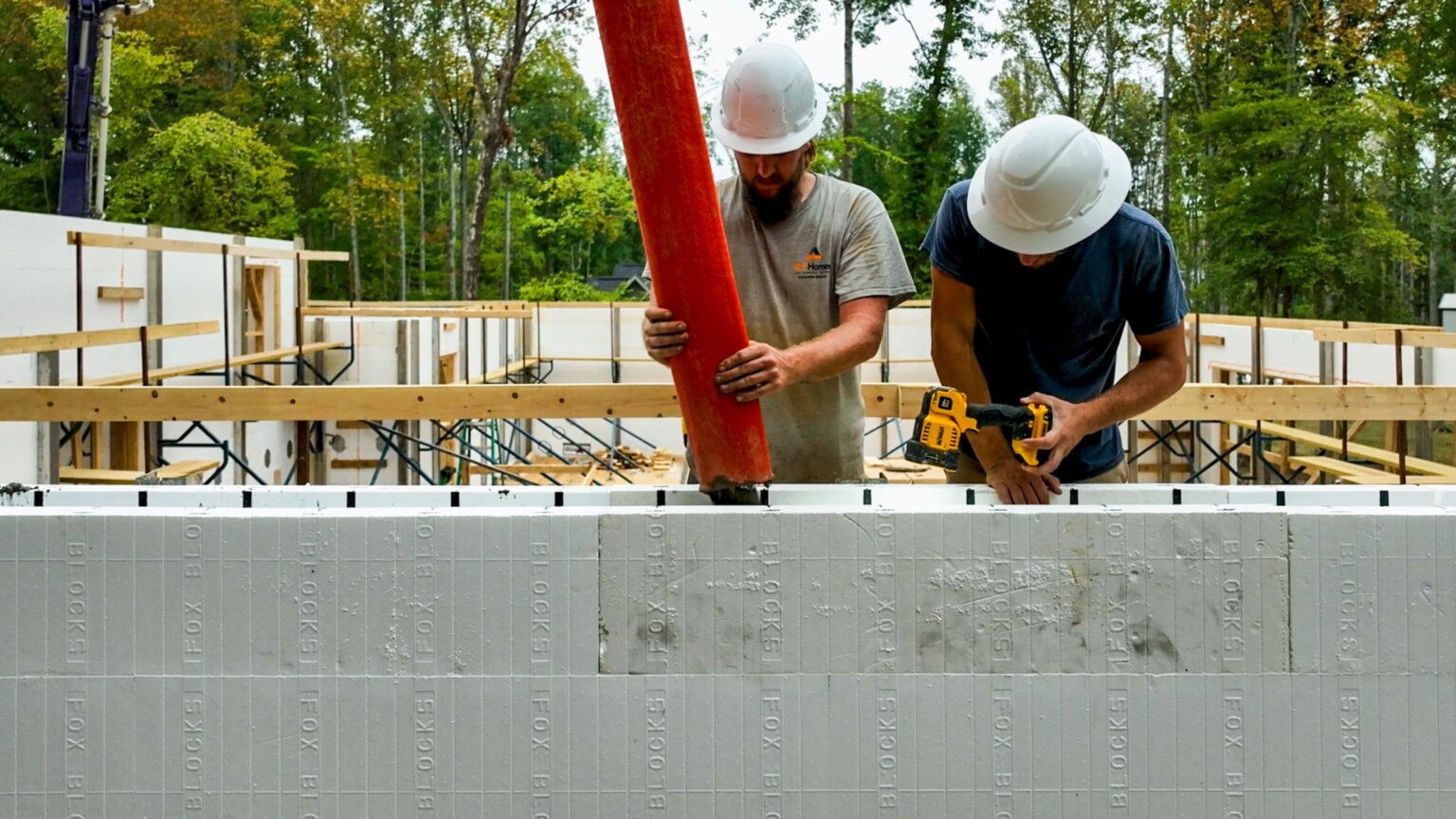
We offer a flexible construction model that allows qualified buyers to act as their own GC for certain phases of the build while ICF Homes of Virginia handles the ICF wall assembly and the elements that require our specific knowledge and crew.

Under Roof Phase

This DIY phase includes windows, doors, and interior framing. It’s ideal for those with home-building experience and ample time to manage the project. The owner acts as the General Contractor and is listed on the building permit, with ICF Homes serving as a subcontractor.
Drywall Phase

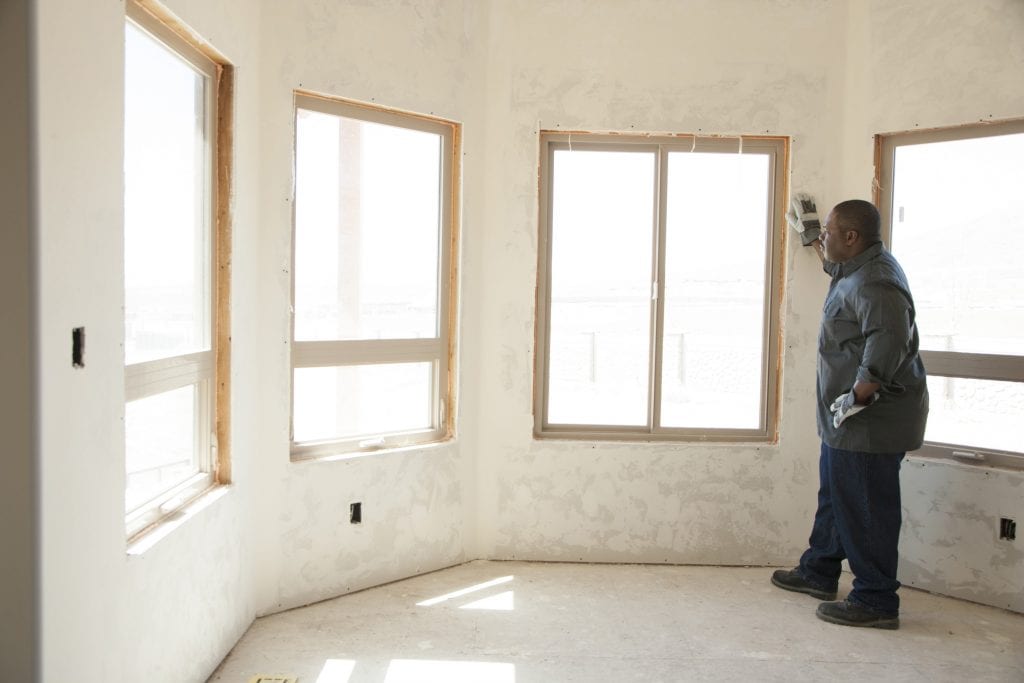
This DIY phase includes windows, doors, and interior framing, along with rough-in (HVAC, plumbing, and electrical) insulation and drywall. It’s a great cost-saving option for clients who prefer to manage the finishing stages of their home. Remaining tasks include exterior finishes, painting, flooring, tile, trim, cabinets, countertops, appliances, and more. The owner acts as the General Contractor and is listed on the building permit, with ICF Homes serving as a subcontractor.

Is This the Right Choice for You?

Owner-building is not for everyone. It requires time, organizational capacity, and a realistic understanding of what general contracting involves. If you are evaluating this as a cost-control option, the honest answer is: it can reduce costs in some phases while adding management complexity across the whole project.

We will tell you clearly whether the arrangement makes sense for your specific situation. We do not recommend it for every buyer.

FREQUENTLY ASKED QUESTIONS

Financing & Budget

Yes. In an owner-builder arrangement, you are the builder of record and are responsible for managing payments to subcontractors. You will typically be required by your lender to maintain a dedicated account for construction funds, and disbursements may be tied to milestone inspections. This is part of the management load the arrangement puts on you.
It can, in some phases. The honest answer is: it depends on your experience, your availability, and how efficiently you can manage subcontractors and materials. The savings on a GC markup can be real, but so can the costs of delays, rescheduling, and coordination problems. We will tell you clearly whether we think the arrangement makes financial sense for your specific situation. We do not recommend it simply because it sounds appealing.
Not necessarily but understanding your financing situation is one of the first things we work through together. Owner-builder arrangements have specific financing requirements that differ from a traditional construction loan. Many lenders require a higher down payment when no licensed GC is named on the loan, and some will not finance an owner-builder project at all. If you are planning to finance the build, it helps to know that going into the conversation so we can give you an accurate picture of how the arrangement would work.

Time Commitment & Availability

Subcontractors have schedules and may not be available when you are ready for them. Materials have lead times. Inspections have to happen in sequence. When an owner-builder misses a window, the build can stall for weeks. This is one of the reasons we assess your situation carefully before recommending this path.
Yes, reliably so. Subcontractors, suppliers, and inspectors operate on daytime schedules. If you cannot be reached or on-site during business hours when a decision needs to be made, construction stops. One of the most common challenges for owner-builders is that they underestimate how much daytime availability the coordination role requires.
More than most people expect. During active construction phases, managing a build as your own GC typically requires 20 to 40 hours per week. That includes scheduling subcontractors, coordinating material deliveries, being on site for inspections, reviewing work at each phase, and handling the problems that come up, because problems always come up. If you are employed full-time in another career, the scheduling conflicts alone will create delays and added cost.

Experience & Qualifications

As the owner-builder, you are listed on the building permit as the general contractor. That means you are legally responsible for code compliance at every phase, for hiring licensed tradespeople in the required categories, and for ensuring inspections are scheduled and passed in the right order. ICF Homes of Virginia serves as a subcontractor for the reduced scope of work. The GC liability sits with you.
You do not need to be a professional project manager, but you need to be organized, responsive, and comfortable managing multiple parties toward a shared deadline. The owner-builder role is fundamentally a coordination job. You are the point of contact for every sub, every supplier, and every inspector. If you have experience running complex projects in any field, that transfers. If you prefer to hand decisions off to someone else, this arrangement will be a poor fit.
Yes. ICF wall assembly requires specific expertise and construction sequencing. That is the work ICF Homes of Virginia handles. What you are responsible for as the owner-builder is everything that happens around and after that phase, including coordinating your subcontractors in the right order, understanding what needs to happen before and after our crew is on site, and managing the flow of the project so it maintains the build schedule.
We find that people who have a realistic understanding of how construction project sequences are managed, and what can go wrong, are best for the owner-builder arrangement. Formal construction experience is a strong advantage. If you have managed subcontractors before, worked in a trade, or have a background in construction management or engineering, you are starting from a better position. If your experience is limited to watching YouTube videos and reading forums, a project of this scope may be more than you expected to manage.

How We Work Together

That is a common position. Many of our clients want to be informed and engaged without managing the logistics themselves. A traditional build with ICF Homes of Virginia as your general contractor gives you involvement in the design and decision process throughout the construction of your home. If that sounds closer to what you are looking for, that conversation starts in the same place: a call with the team.
We handle the chosen phase of construction and the technical elements that require our specific expertise and crew. You handle the coordination of every other phase you take on: hiring subs, scheduling, inspections, materials, and on-site problem solving. The line between our scope and yours is clearly defined before the project starts. There are no gray areas on a well-structured build.
We offer two build option phases for buyers interested in being their own GC. The first is the Under Roof phase, which covers windows, exterior doors, and interior framing after the ICF walls are complete. The second is the Drywall phase, which picks up after rough-in work including HVAC, plumbing, and electrical, and includes insulation and drywall. The finishing work from that point forward is yours to manage. Both arrangements require you to be listed on the permit and to carry the GC responsibilities for your phases.
Two men standing on a scaffolding with a hose from a concrete pump truck filling an ICF Form

If you are considering an owner-builder arrangement, start with a conversation about what it involves and whether it fits your situation.